
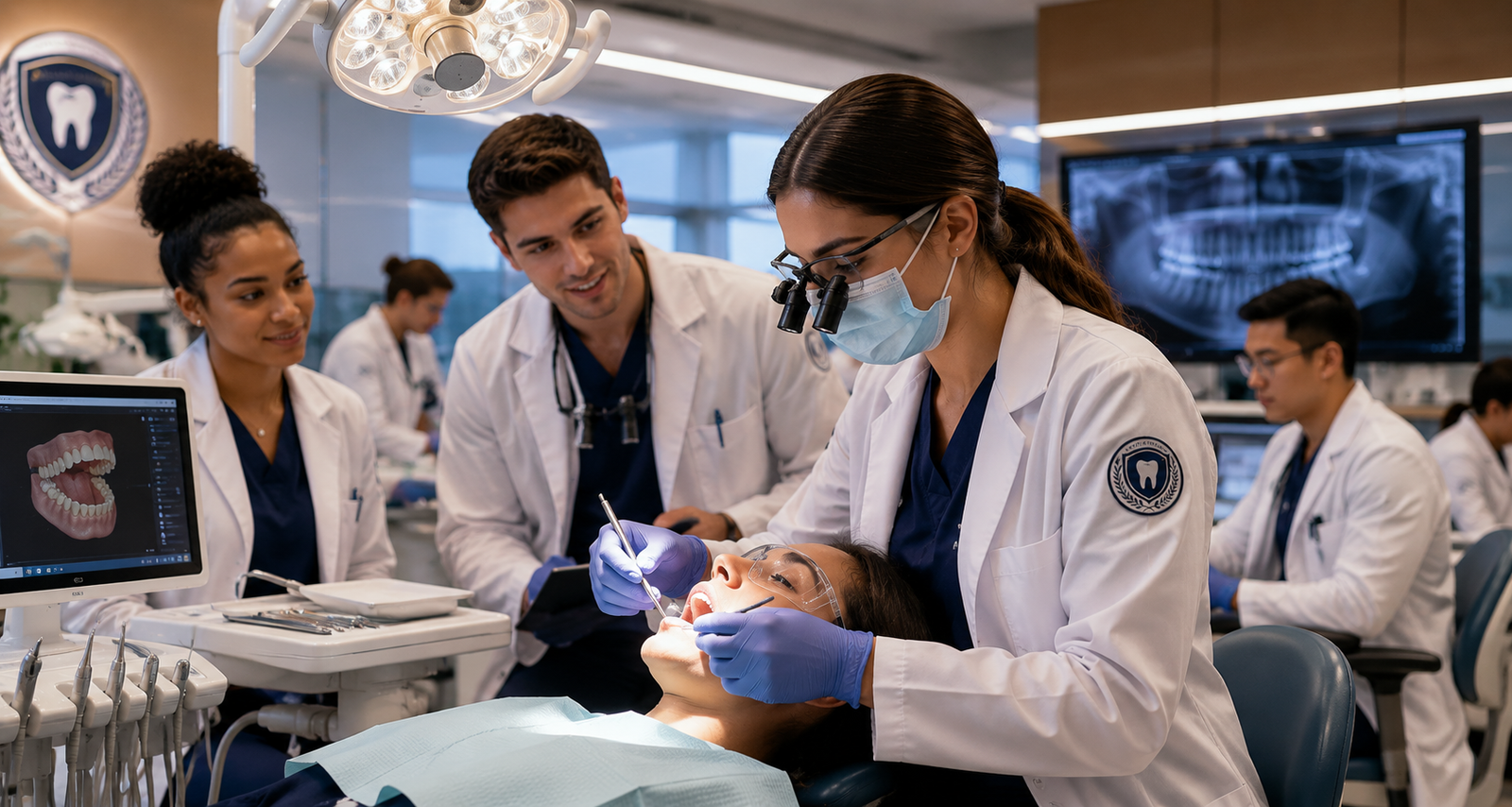
Doctor of Medicine in Dentistry
Build expertise in modern dental medicine while developing the clinical, diagnostic, and professional competencies required for today’s evolving healthcare environments.
Program Overview
Shape the future of oral health with a Doctor of Medicine in Dentistry (DMD) degree that blends scientific excellence, clinical expertise, and compassionate care. The four-year DMD program prepares students to provide oral healthcare as general dentists. This includes health promotion, disease prevention, assessment, diagnosis, treatment planning, clinical care, and practice management.
The competency-based curriculum also reflects the school’s commitment to developing professionalism, ethics, person-centered care, integrated sciences, evidence-based practices, and critical thinking. Furthermore, our postdoctoral programs offer opportunities for surgical and other advanced specializations.
Whether your goals include private practice, research, public health, or advanced specialization, Belcroft’s DMD program equips you with the clinical skills, professional judgment, and lifelong learning mindset to make a meaningful impact on your community and beyond.
- Year 1: Provides an integrated approach to the basic sciences. Students learn the fundamentals of oral radiology, dental materials, restorative dentistry, periodontology, and dental disease prevention.
- Year 2: Emphasizes technical dental skills development. This year includes didactic and laboratory courses in facial growth, prosthodontics, oral surgery, periodontology, endodontology, and dental materials application.
- Years 3 and 4: Emphasize clinical practice supported by lecture and seminar sessions. Content covers oral disease diagnosis, treatment planning, and clinical treatment procedures. Students also participate in supervised off-campus educational experiences and are encouraged to strengthen personal qualities to meet patient needs and professional standards.
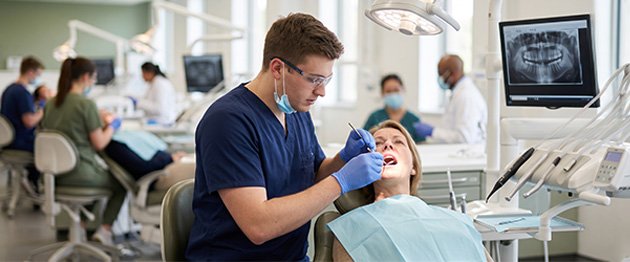
Shape the future of oral health with a Doctor of Medicine in Dentistry (DMD) degree that blends scientific excellence, clinical expertise, and compassionate care.
Program Objectives
The Doctor of Medicine in Dentistry (DMD) program trains students to become competent, compassionate, and evidence-based dental practitioners. The primary objective is to equip graduates with the comprehensive clinical skills, biomedical knowledge, and diagnostic capabilities required to prevent, diagnose, and treat oral diseases.
Students undergo rigorous preclinical simulation and direct patient care rotations, mastering advanced techniques in restorative dentistry, oral surgery, periodontics, and endodontics. Additionally, programs emphasize critical thinking and scientific inquiry, enabling graduates to evaluate emerging dental technologies and integrate research into daily clinical decision-making.
Beyond technical expertise, the program focuses on developing leadership, ethical responsibility, and public health awareness. It aims to cultivate professionals who understand the critical link between oral health and systemic well-being, preparing them to collaborate within multidisciplinary healthcare teams.
Graduates are trained to provide patient-centered care to diverse populations, address oral health disparities, and practice within legal and ethical frameworks. Ultimately, the objective is to graduate socially responsible clinicians committed to lifelong learning, community service, and the highest standards of professional integrity.
Clinical Skills
Equip graduates with comprehensive clinical skills, biomedical knowledge, and diagnostic capabilities required to prevent, diagnose, and treat oral diseases.
Evidence-Based Care
Emphasize critical thinking and scientific inquiry to evaluate emerging dental technologies and integrate research into daily clinical decision-making.
Leadership and Ethics
Develop leadership, ethical responsibility, and public health awareness for collaboration within multidisciplinary healthcare teams.
Patient-Centered Practice
Prepare graduates to provide patient-centered care to diverse populations, address oral health disparities, and practice within legal and ethical frameworks.
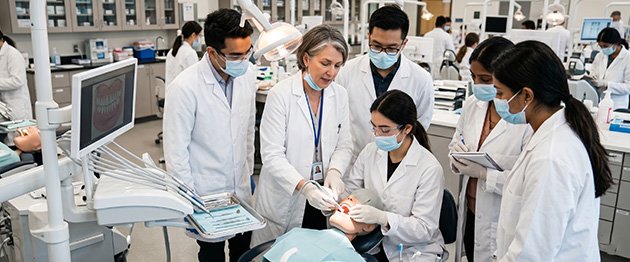
The objective is to graduate socially responsible clinicians committed to lifelong learning, community service, and the highest standards of professional integrity.
Curriculum
The Doctor of Medicine in Dentistry (DMD) program requires completion of the following 142 credit hours.
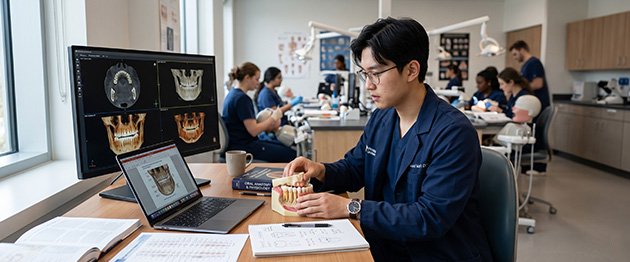
Credit Hour Summary
Admission Requirements
Application Submission
Completed Graduate Admissions Application and Application Fee of $50.
Academic Qualifications
A Baccalaureate degree from an accredited college or university in the United States or degree equivalent to a U.S. bachelor’s degree (outside U.S.) i.e. Bachelor of Science in Dentistry, Biology, Biomedical Sciences / Medical Sciences, Chemistry / Biochemistry, Microbiology / Genetics, and Neuroscience.
GPA Requirement
Admission to the program requires a minimum undergraduate cumulative grade-point average of 2.0.
Drug Testing
During your first semester, drug testing will be required, as it is for all clinical students at Belcroft.
Academic Transcripts
Official transcripts are required. The prospective student must arrange to have an evaluation of your foreign transcript by one of the recognized Education evaluation companies. The cost for foreign transcript evaluation is the responsibility of the student.
Professional Resume
Professional Resume.
Letters of Recommendation
Two letters of recommendation.
Statement of Purpose
Statement of Purpose.
GRE (Optional)
GRE optional.
English Proficiency
Proof of English Language Proficiency (TOEFL/IELTS/PTE/Duolingo Score Report). Non-native English speakers who did not complete post-secondary education exclusively in the English language must provide proof of English language proficiency.
Dental Admission Test
International applicants must submit Dental Admission Test (DAT) scores that are not older than three years.
Proof of Funds
Proof of funds.

Admission to the program requires a minimum undergraduate cumulative grade-point average of 2.0.
Degree Outcomes
Upon completion of the program, a graduate in the DMD concentration will be able to:
Apply biomedical, behavioral, and clinical sciences in the prevention, diagnosis, and treatment of oral and systemic diseases.
Deliver patient-centered oral healthcare using evidence-based decision-making and ethical clinical judgment.
Perform comprehensive dental procedures safely and effectively across diverse patient populations.
Integrate critical thinking, problem-solving, and diagnostic reasoning into clinical practice and treatment planning.
Utilize modern dental technologies, digital systems, and radiographic imaging to support high-quality patient care.
Demonstrate competency in restorative dentistry, periodontics, endodontics, prosthodontics, pediatric dentistry, and oral surgery.
Communicate effectively with patients, families, healthcare professionals, and interdisciplinary teams.
Apply principles of professionalism, ethics, cultural competence, and legal responsibility in dental practice.
Promote oral health education, disease prevention, and community-based healthcare initiatives.
Manage dental practice operations, patient safety, infection control, and quality improvement processes.
Evaluate scientific literature and incorporate evidence-based dentistry into clinical decision-making and lifelong learning.
Pursue professional growth, advanced specialization, leadership, and service within the dental profession.

Upon completion of the program, a graduate in the DMD concentration will be able to deliver patient-centered oral healthcare using evidence-based decision-making and ethical clinical judgment.
Credit for Prior Learning
Belcroft University does not accept prior learning experience, professional training, or experiential learning toward fulfillment of degree requirements at the doctorate level. The DMD curriculum ensures advanced, research-based study and acquisition of original scholarly competencies beyond prior graduate preparation.
All students must complete the full prescribed course of study. as outlined in the approved curriculum. Transfer or experiential credit is not applicable to any component of the DMD degree.
Not Accepted
- Prior Learning Experience
- Professional Training
- Experiential Learning
- Transfer Credits
Required
- Full Prescribed Course of Study
- Doctorate Level Requirements
- Approved Curriculum
- DMD Degree Components

Transfer or experiential credit is not applicable to any component of the DMD degree.
Career Options
Career options may require additional experience, training, or other factors beyond the successful completion of this program. The DMD Concentration degree can academically prepare you to pursue career options such as:
General Dentist
General Dentist
Associate Dentist
Associate Dentist
Public Health Dentist
Public Health Dentist
Dental Director
Dental Director
Academic Dentist / Clinical Instructor at a dental school
Academic Dentist / Clinical Instructor at a dental school
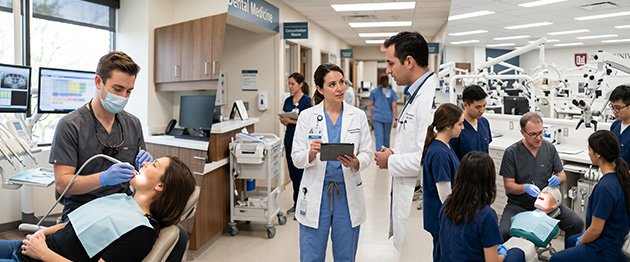
The DMD Concentration degree can academically prepare you to pursue career options such as General Dentist, Associate Dentist, Public Health Dentist, Dental Director, and Academic Dentist / Clinical Instructor at a dental school.
Work Settings
The DMD Concentration degree can academically prepare you to work in settings such as:
Private Dental Clinic
Group Dental Practice
Community Health Center
Hospital
Dental School
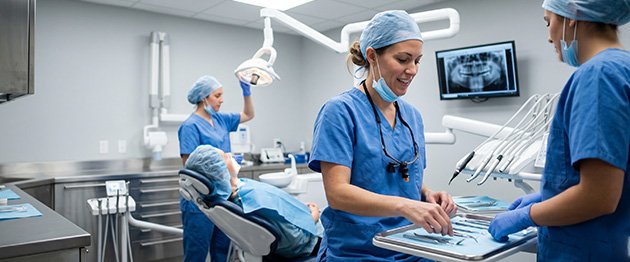
The DMD Concentration degree can academically prepare you to work in settings such as Private Dental Clinic, Group Dental Practice, Community Health Center, Hospital, and Dental School.