

MS in Accounting
Build expertise in financial reporting, audit & control, and US federal taxation — designed for aspiring leaders entering or advancing in the accounting profession.
Program Overview
The MS in Accounting program consists of 42 graduate-level semester credit hours, of which 12 are foundation, 27 are concentration, and 3 are elective (including the option coursework, project, or internship).
The program includes 7 concentrations: (1) Cost Accounting, (2) Bookkeeping and QuickBooks, (3) Taxation for Individuals and Sole Proprietors, (4) Financial Accounting Theory and Reporting, (5) Financial Statement Analysis, (6) Accounting Ethics, and (7) Auditing.
Students must choose one of three options: coursework, MS project, or Internship. The program may be completed entirely on campus, entirely online, or through a combination of on-campus and online courses.
- 42-credit comprehensive curriculum with 7 specialization concentrations
- Hands-on, practice-oriented approach to accounting education
- Flexible learning: fully online, on-campus, or hybrid
- Capstone Project, Internship, or coursework completion option
- Ideal for career-changers, advancement seekers, and skill refreshers

Our mission is to build expertise in the fundamentals of accounting — financial reporting, audit and control, and US federal taxation — preparing leaders for today’s dynamic financial landscape.
Program Objectives
The MS in Accounting program (MSA) is for people who want to be leaders in their profession. The program builds expertise in the fundamentals of accounting – financial reporting, audit and control, and US federal taxation. Beyond that, the MSA delivers analytic capabilities that the industry defines as cutting-edge. It is a hands-on and practice-oriented program designed for people who intend to use the degree to enter the field for the first time, those looking to gain new skills to advance in their current industry, or those already working in the accounting field looking to refresh their skill set. The MSA program curriculum provides students with the skills and knowledge they need to excel in the workplace once they graduate.
Financial Reporting
Master financial reporting standards and analytical tools used in modern accounting practice.
Audit & Control
Develop expertise in internal audit, control systems, and risk management frameworks.
US Federal Taxation
Gain in-depth knowledge of individual and business taxation rules and regulations.
Accounting Ethics
Analyze and apply ethical frameworks governing the accounting profession and its stakeholders.
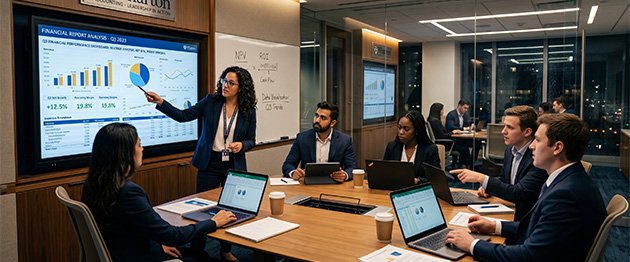
The MSA program curriculum provides students with the skills and knowledge they need to excel in the workplace — from entry-level professionals to seasoned practitioners seeking advancement.
Curriculum
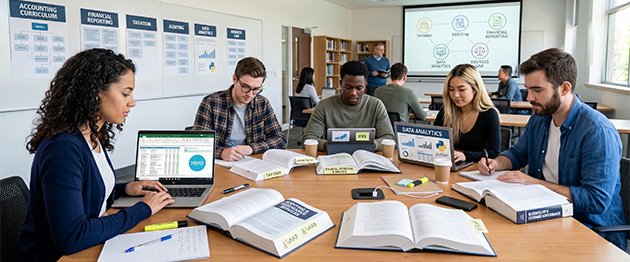
The MS in Accounting program requires completion of the following 42 credit hours across three core areas.
Credit Hour Summary
Admission Requirements
Application Submission
Submit a completed Graduate Admissions Application with the non-refundable application fee of $50.
Bachelor’s Degree in Any Field
A bachelor’s degree in any field from an accredited institution is accepted. No specific undergraduate major is required for the MSA program.
GPA Requirement
Admission requires a minimum undergraduate cumulative grade-point average of 2.0.
Academic Transcripts
Official transcripts are required. The prospective student must arrange to have an evaluation of your foreign transcript by one of the recognized Education evaluation companies. The cost for foreign transcript evaluation is the responsibility of the student.
Professional Resume
A current professional resume detailing your academic background and relevant work experience.
Letters of Recommendation
Two letters of recommendation from academic or professional references who can speak to your qualifications and potential.
Statement of Purpose
A detailed statement covering your career goals, professional interests, and reasons for pursuing the MSA program.
GRE (Optional)
GRE optional.
English Language Proficiency
Proof of English Language Proficiency (TOEFL/IELTS/PTE/Duolingo Score Report). Non-native English speakers who did not complete post-secondary education exclusively in the English language must provide proof of English language proficiency.
Proof of Funds
Documentation demonstrating sufficient financial resources to support your graduate studies.

The MSA welcomes applicants from all academic backgrounds — no prior accounting major required. Your ambition and dedication are what matter most.
Degree Outcomes
Successful completion of the MSA Program will enable students to:
Design strategies to solve complex problems with multiple variables and aid in the development of solutions that advance strategic goals.
Communicate and present accounting information using data-driven narratives to provide recommendations to internal and external stakeholders of diverse backgrounds.
Integrate current information technologies to report and analyze financial information and evaluate accounting data based upon mastery of a common body of accounting knowledge.
Analyze ethical issues within the accounting profession and apply governing rules, regulations, and ethical frameworks of accounting, taxation, and auditing.
Research and apply the governing rules, regulations, and ethical frameworks to support the accurate preparation of financial documentation and recommendations.
Collaborate effectively as a team to enhance critical thinking and advance solutions to real-world accounting challenges.

As a certified accounting professional, help lead financial integrity in a growing industry and brighten your future. Trust Belcroft University to help you achieve it.
Credit for Prior Learning
A maximum of six credits of transfer credit or other approved prior learning credit may be applied toward a master’s degree program. Credit may be granted based on official transcripts, verified work experience, or professional certifications and must be approved by qualified faculty or the Admissions Department. Such credits are recorded as “Credit for Prior Learning,” carry no letter grade, and are excluded from GPA calculations.
Accepted Sources
- Official Transcripts
- Verified Work Experience
- Professional Certifications
- Up to 6 Credits Max
Key Conditions
- No Letter Grade Assigned
- Excluded from GPA
- Faculty Approval Required

Your professional experience has value. Belcroft University recognizes prior learning while ensuring that all MSA graduates meet the rigorous academic standards of the program.
Career Options
Career options may require additional experience, training, or other factors beyond the successful completion of this program. The MS in Accounting can academically prepare you to pursue:
Certified Public Accountant (CPA)
Achieve CPA licensure and serve clients in audit, tax, and advisory across public accounting firms.
Managerial / Cost Accountant
Oversee cost analysis, budgeting, and financial planning within corporations and manufacturing firms.
Internal Revenue Agent
Examine tax returns and enforce tax laws for federal and state government agencies.
Tax Consultant
Advise individuals and businesses on tax planning, compliance, and optimization strategies.
Financial Executive / CFO
Lead financial strategy, reporting, and governance at the executive level in major organizations.
Audit & Assurance Associate
Conduct independent audits, evaluate financial controls, and ensure regulatory compliance.

The MSA program empowers graduates to lead with financial integrity and analytical acumen — opening doors to prestigious roles across public accounting, government, and private enterprise.
Work Settings
The MS in Accounting degree can academically prepare you to work in settings such as:
Public Accounting Firms
Corporations & Private Businesses
Government Agencies
Financial Companies
Non-Profit Organizations
Wealth Management Firms

MSA graduates are prepared to contribute across the most influential financial institutions — from global accounting firms to government agencies and thriving non-profits.