
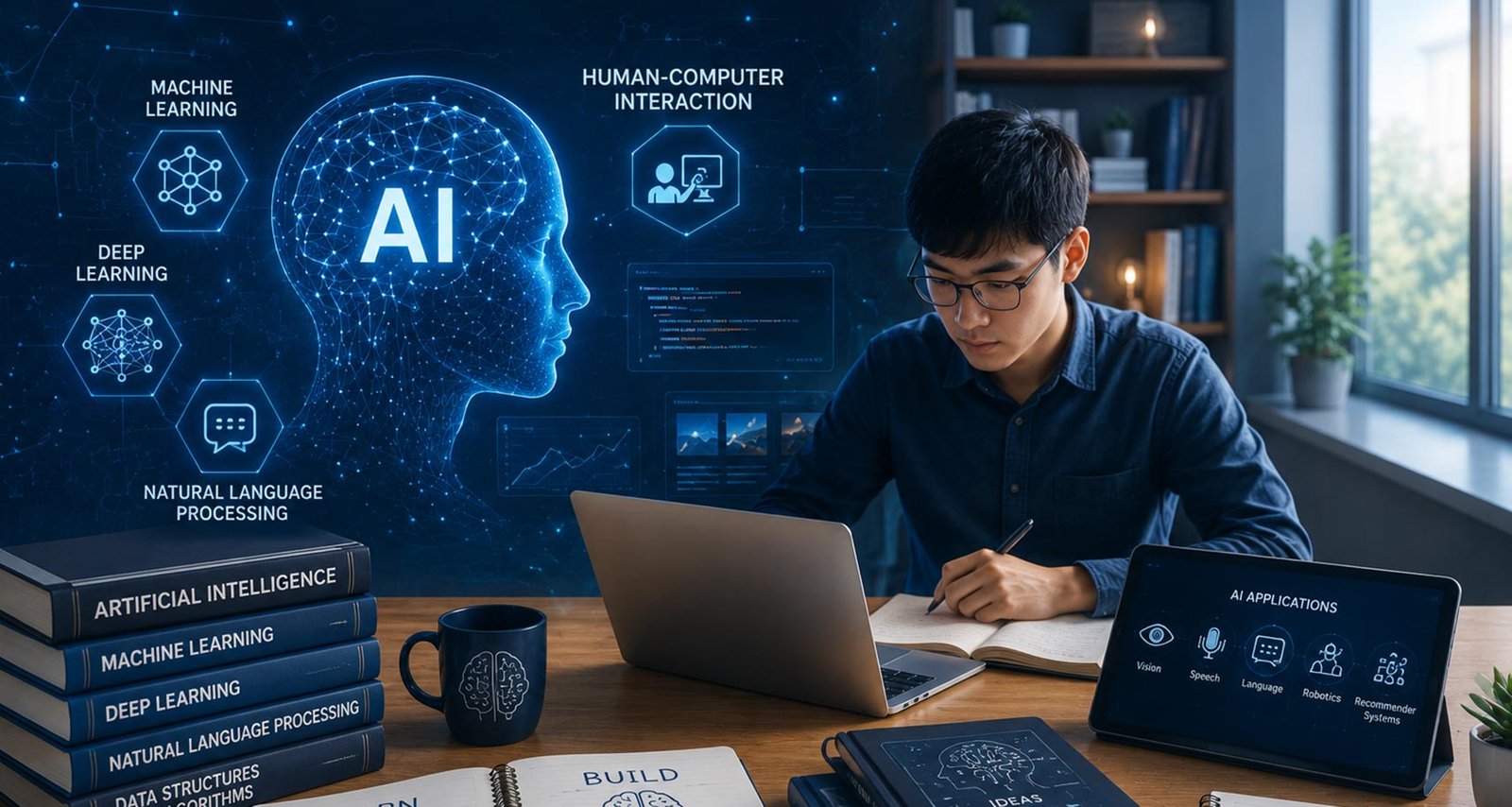
MS in Artificial Intelligence
Design, develop, and implement AI systems across high-demand sectors — built for tomorrow's innovators who will harmoniously integrate artificial intelligence into human life.
Program Overview
The MS in Artificial Intelligence program consists of 30 graduate-level semester credit hours, of which 15 are foundation, 12 are concentration, and 3 are elective (including the option coursework, project, or internship).
The program includes 4 concentrations: (1) Human-Computer Interaction, (2) Machine Learning, (3) Deep Learning, and (4) Data Engineering. Students must choose one of three options: coursework, MS project, or Internship.
The program may be completed entirely on campus, entirely online, or through a combination of on-campus and online courses.
- 30-credit program with 4 AI specialization concentrations
- Emphasis on experiential learning and problem-solving
- Flexible: fully online, on-campus, or hybrid delivery
- Capstone Project, Internship, or coursework options
- Designed for high-demand sectors across technology and industry
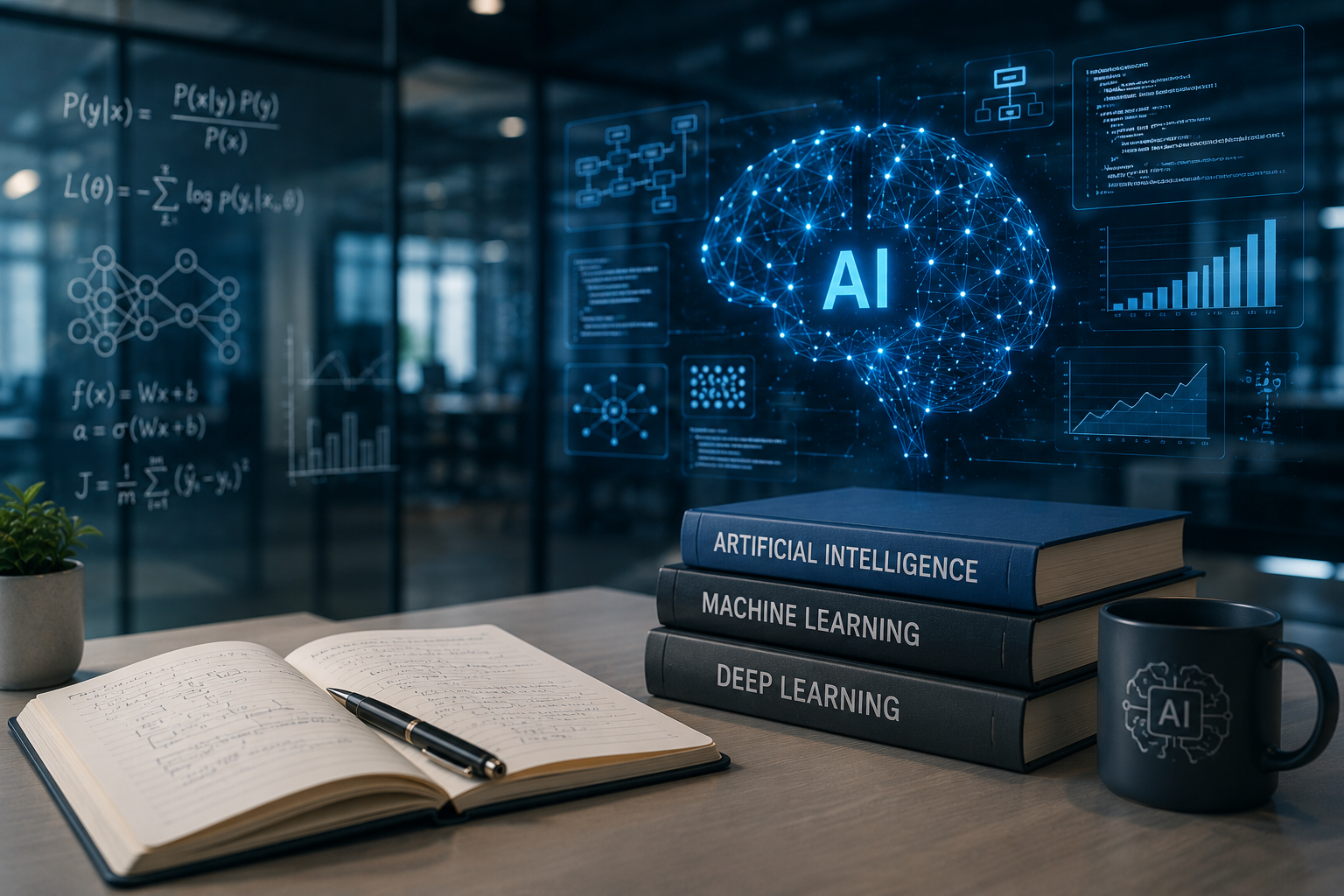
Our mission is to produce graduates who are highly qualified to harmoniously integrate artificial intelligence into human life — driving value for companies and users alike.
Program Objectives
The Master of Science in Artificial Intelligence program is designed to produce graduates who are highly qualified and to harmoniously integrate artificial intelligence into human life to drive value both for the companies providing the AIs and the users interacting with them. An MS in Artificial Intelligence can lead to a variety of career opportunities with high earning potential. This program offers students the essential knowledge and skills to design, develop, and implement AI systems across various high-demand sectors. The core curriculum is designed to provide an in-depth understanding of fundamental AI concepts, forming a solid foundation for both theoretical and practical aspects of artificial intelligence. Students learn to recognize the psychological and design implications of human interactions with intelligent systems and how business needs affect the way intelligent systems are considered and deployed. The emphasis of the Artificial Intelligence, MS program is on experiential learning and problem-solving.
AI Algorithms & Techniques
Understand representations, algorithms, and techniques used across AI and apply them in real applications.
Machine Learning
Apply machine-learning techniques to draw inferences from data and automate AI system development.
Human-AI Integration
Understand various ways humans are integrated into mixed human-AI environments for system performance.
Responsible AI Ethics
Understand the ethical concerns in developing responsible AI technologies for society and enterprise.

An MS in Artificial Intelligence can lead to a variety of career opportunities with high earning potential, offering the essential skills to design, develop, and deploy AI systems across high-demand sectors.
Curriculum
The MS in Artificial Intelligence requires completion of the following 30 credit hours across three areas.

Credit Hour Summary
Admission Requirements
Application Submission
Submit a completed Graduate Admissions Application with the non-refundable application fee of $50.
Bachelor’s Degree in a Related Field
Bachelor’s degree in a related field from an accredited college or university in the United States or degree equivalent to a U.S. bachelor’s degree (outside U.S.) i.e. Bachelor’s degree in Artificial Intelligence, Computer Science, Information Technology, Software Engineering, Electronics & Communications, Electrical Engineering, Robotics Engineering, Cyber Security, Communications Engineering, Data Science, Computer Applications, Computer Engineering, or work experience in related fields.
GPA Requirement
Admission requires a minimum undergraduate cumulative grade-point average of 2.0.
Academic Transcripts
Official transcripts are required. The prospective student must arrange to have an evaluation of your foreign transcript by one of the recognized Education evaluation companies. The cost for foreign transcript evaluation is the responsibility of the student.
Professional Resume
A current professional resume detailing your academic background and relevant work experience.
Letters of Recommendation
Two letters of recommendation from academic or professional references who can attest to your qualifications.
Statement of Purpose
A detailed statement covering your career goals, research interests, and reasons for pursuing the MSAI program.
GRE (Optional)
GRE optional.
English Language Proficiency
Proof of English Language Proficiency (TOEFL/IELTS/PTE/Duolingo Score Report). Non-native English speakers who did not complete post-secondary education exclusively in the English language must provide proof of English language proficiency. GRE is optional.
Proof of Funds
Documentation demonstrating sufficient financial resources to support your graduate studies.
Strong applicants with relevant technical backgrounds and work experience in AI-adjacent fields are encouraged to apply and join our growing community of innovators.
Degree Outcomes
Successful completion of the MS AI Program will enable students to:
Understand representations, algorithms, and techniques used across AI and be able to apply and evaluate them in applications as well as develop their own.
Understand and apply machine-learning techniques, in particular to draw inferences from data and help automate the development of AI systems and components.
Lead teams in the design and development of new artificial intelligence technologies and products across various sectors.
Understand the various ways and reasons humans are integrated into mixed human-AI environments to improve overall system performance and human learning.
Understand the ethical concerns in developing responsible AI technologies that serve both enterprise and society.
Apply advanced knowledge of core principles and technologies to solve problems in different areas of artificial intelligence.

As an AI leader, help shape the intelligent systems that define tomorrow. Trust Belcroft University to equip you with the knowledge and skills to lead the future of technology.
Credit for Prior Learning
A maximum of six credits of transfer credit or other approved prior learning credit may be applied toward a master’s degree program. Credit may be granted based on official transcripts, verified work experience, or professional certifications and must be approved by qualified faculty or the Admissions Department. Such credits are recorded as “Credit for Prior Learning,” carry no letter grade, and are excluded from GPA calculations.
Accepted Sources
- Official Transcripts
- Verified Work Experience
- Professional Certifications
- Up to 6 Credits Max
Key Conditions
- No Letter Grade Assigned
- Excluded from GPA
- Faculty Approval Required

Your professional AI experience and certifications have real value. Belcroft University recognizes your prior learning while upholding the rigor that defines our graduates.
Career Options
A Master of Artificial Intelligence degree can academically prepare you to pursue career options such as:
AI Engineer
Design and build intelligent systems, AI platforms, and machine learning pipelines at leading tech organizations.
Data Scientist
Analyze complex datasets and develop predictive models to inform strategic business decisions.
Machine Learning Engineer
Develop scalable ML models and deploy them in production environments across diverse industries.
Data Mining & Analysis
Discover hidden patterns and insights in large-scale datasets for business intelligence and research.
Business Intelligence Developer
Build BI platforms and dashboards that transform raw data into actionable organizational insights.

The MSAI program empowers individuals to lead with innovation, offering the tools and insights needed to make significant contributions to the AI-driven future of technology and society.
Work Settings
A Master of Artificial Intelligence degree can academically prepare you to work in settings such as:
Technology Companies
Entertainment Services
Software Companies
Social Media Companies
Banking & Securities
Healthcare & Biotech
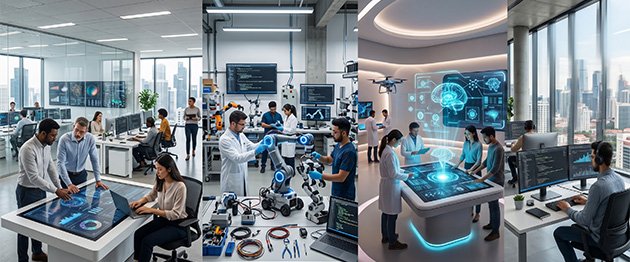
MSAI graduates are equipped to lead AI initiatives at the world’s most innovative organizations — from Silicon Valley tech giants to pioneering healthcare and financial institutions.